
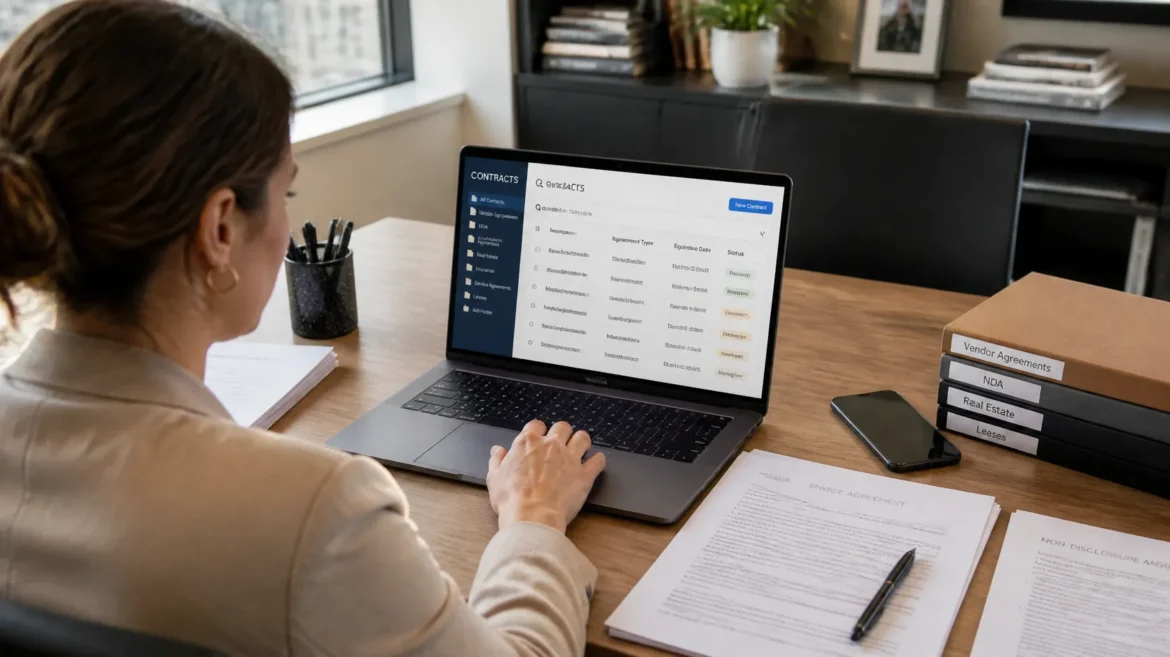
Businesses handle different types of agreements involving customers, suppliers, employees, and business partners. These documents contain important information about responsibilities, payment conditions, deadlines, and legal obligations. Managing numerous contracts manually can create administrative challenges, particularly when documents are stored across different locations.
Contract Document Management provides a structured approach to storing, organizing, and maintaining business agreements. Digital applications support Digital Agreement Organization by centralizing important documents, simplifying information retrieval, and helping companies monitor contract versions and renewal schedules.
Understanding Business Contract Document Management
Contract document management involves creating, storing, reviewing, and maintaining agreements throughout their lifecycle. An organized management process helps businesses maintain accurate documentation while improving administrative efficiency.
Common Types of Contracts Used in Businesses
Businesses commonly manage employment agreements, supplier contracts, service agreements, sales contracts, and partnership documents. Each contract establishes specific responsibilities and conditions between the parties involved.
Some agreements also contain confidentiality clauses, payment schedules, performance requirements, and termination conditions. Categorizing contracts according to their purpose helps employees identify relevant documents more efficiently.
Important Information Stored in Business Agreements
Business agreements generally contain information about the parties involved, contract duration, payment obligations, service descriptions, and applicable terms. Some documents also include renewal conditions, confidentiality requirements, and dispute resolution procedures. Proper Digital Agreement Organization helps businesses arrange these details systematically and maintain easy access to important contractual information.
Maintaining these details accurately helps employees understand contractual responsibilities. It also reduces the possibility of overlooking important obligations during business operations.
Challenges of Managing Physical Contract Documents
Physical contract storage can become difficult when businesses manage large numbers of agreements. Documents may be misplaced, damaged, duplicated, or stored in locations that employees cannot easily access.
Manual tracking also makes monitoring expiration dates and document revisions more complicated. These challenges can increase administrative workloads and delay important business decisions.
Organizing Business Agreements With Digital Applications
Digital contract management applications provide centralized environments for storing and maintaining business documents. These platforms help employees access relevant agreements while supporting more consistent administrative processes.
Creating a Centralized Contract Document Repository
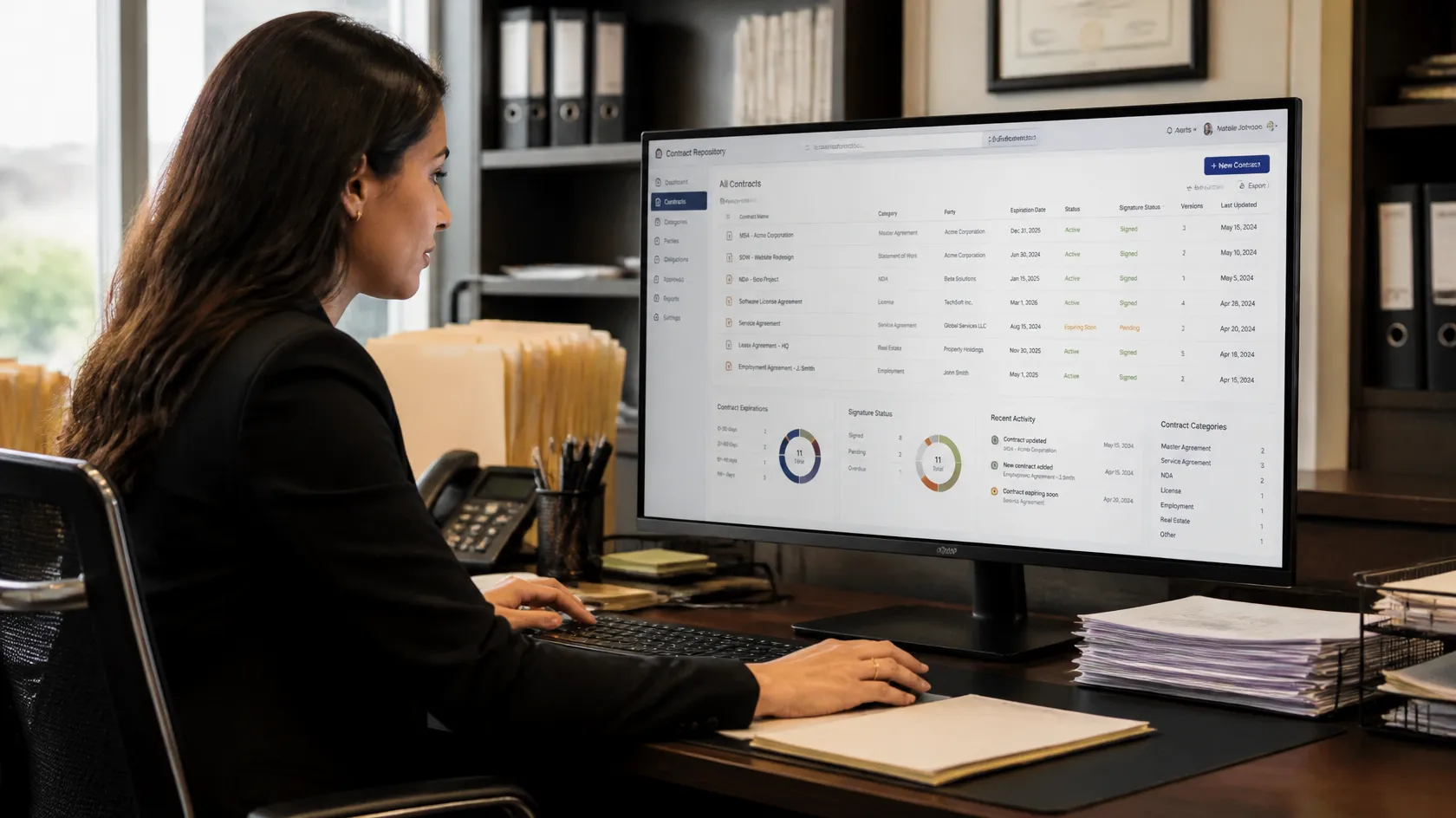
A centralized repository allows businesses to store contracts in one organized digital environment. Employees with appropriate permissions can access important documents without searching through multiple physical folders or separate storage locations.
Centralized storage also makes document backup and administrative coordination easier. Companies should select platforms that provide appropriate security features and reliable document storage.
Categorizing Agreements for Easier Document Retrieval
Organizing contracts by category, department, supplier, or agreement status helps employees locate documents quickly. Consistent naming conventions and searchable document information further improve retrieval processes.
Businesses can also use metadata such as contract dates, responsible departments, and agreement types. These details make managing large collections of digital documents more efficient.
Tracking Contract Versions and Renewal Deadlines
Contract applications can help employees monitor document revisions and upcoming renewal dates. Version tracking makes it easier to identify the latest agreement while preserving previous documents for reference.
Automated reminders can also notify responsible employees when contracts approach their expiration dates. This helps businesses review agreements before renewal deadlines and avoid unnecessary administrative delays.
Improving Contract Organization and Document Control
Effective contract administration requires more than storing documents digitally. Businesses must also establish access controls, maintain accurate records, and implement procedures that protect sensitive agreements.
Managing Access Permissions for Sensitive Agreements
Not every employee needs access to every business contract. Digital applications allow administrators to assign permissions according to employee responsibilities and organizational roles.
Restricting access to sensitive agreements helps reduce unauthorized document exposure. 4leave the organization.
Maintaining Accurate Digital Agreement Records
Accurate digital records help businesses preserve important contractual information throughout an agreement’s lifecycle. Employees should update documents whenever authorized changes occur and ensure that revised versions are properly stored.
Maintaining consistent records also helps companies review previous agreements and verify important business commitments when needed.
Improving Document Security and Retrieval Processes
Document security features such as encryption, authentication, access logs, and secure backups help protect confidential business information. These measures reduce the risk of unauthorized access and accidental document loss.
Businesses should also establish clear document retrieval procedures. Regular security reviews and organized storage practices can improve administrative control.
Organize Your Business Contracts With Smarter Digital Tools
Digital contract management applications help businesses maintain organized agreements, monitor important deadlines, and protect sensitive documents. Centralized storage and structured administrative processes can reduce manual workloads while improving document accessibility.
Choose an application that offers reliable security controls, version tracking, searchable storage, and renewal notifications. Consistent contract management supports better business organization and helps companies maintain accurate documentation as their operations grow.